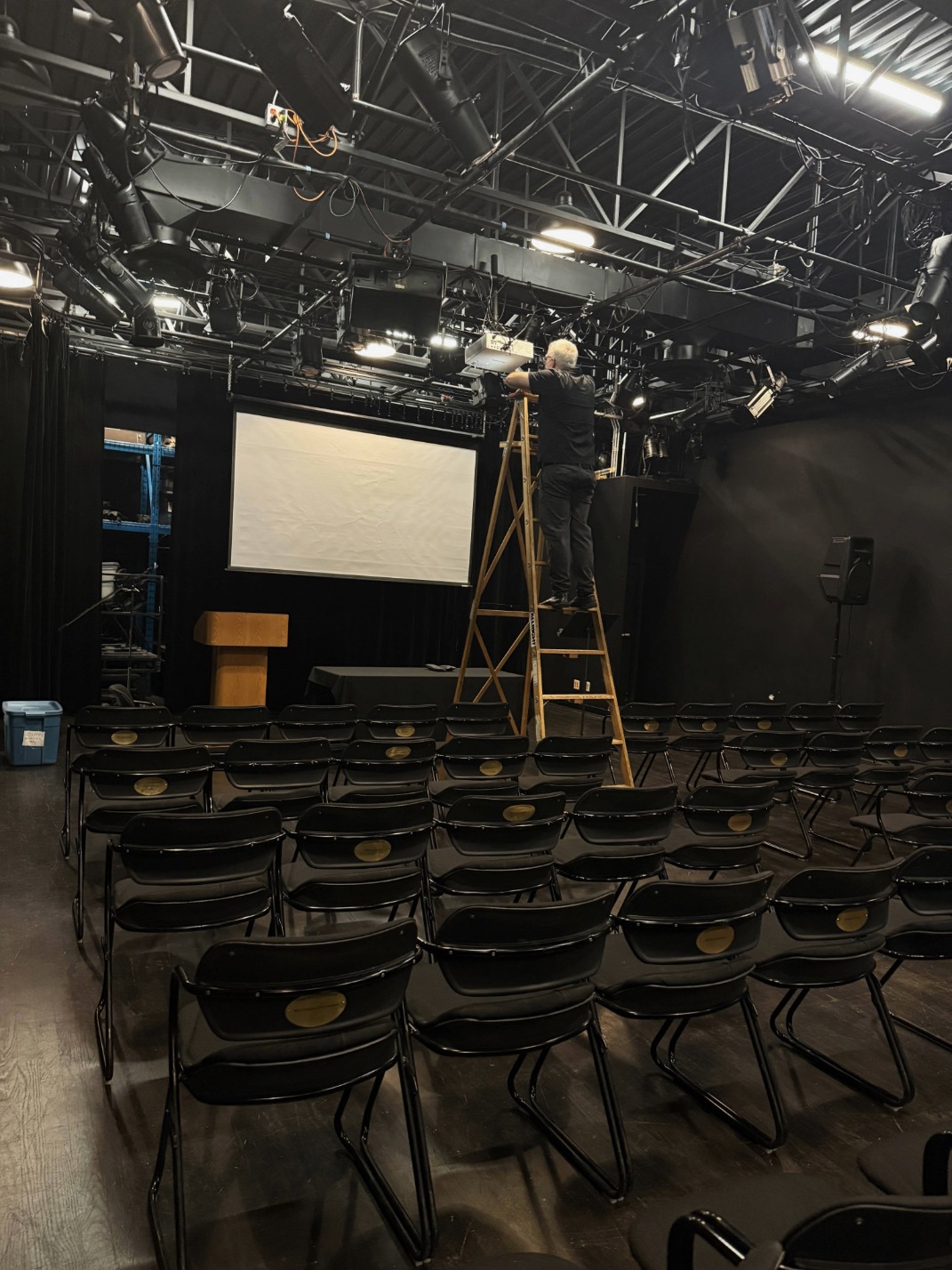
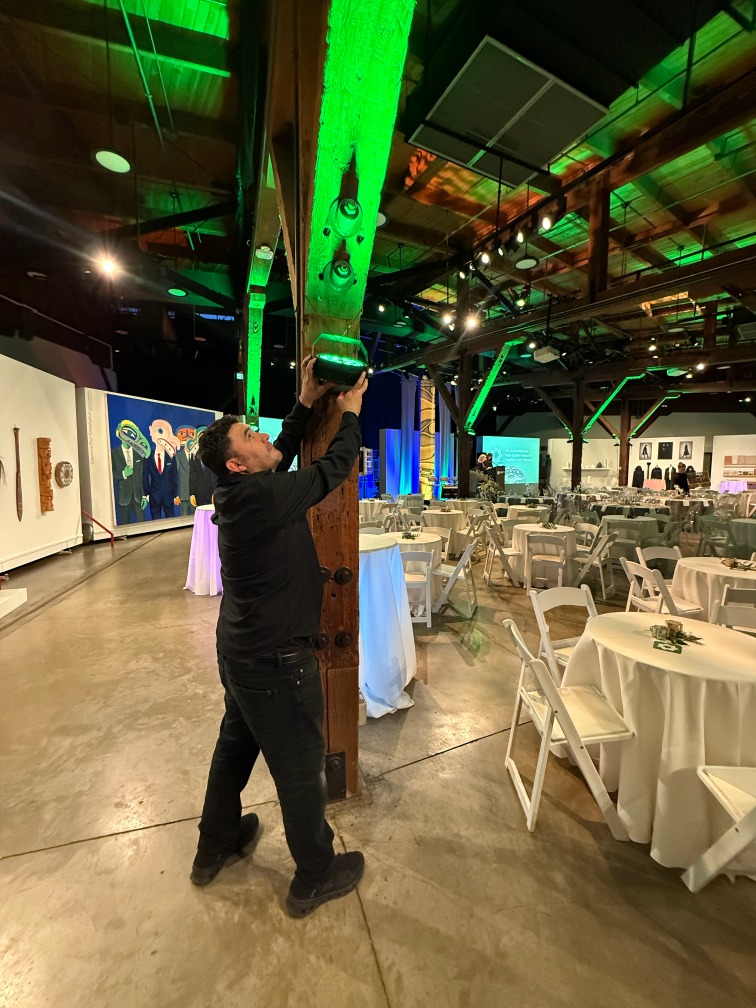
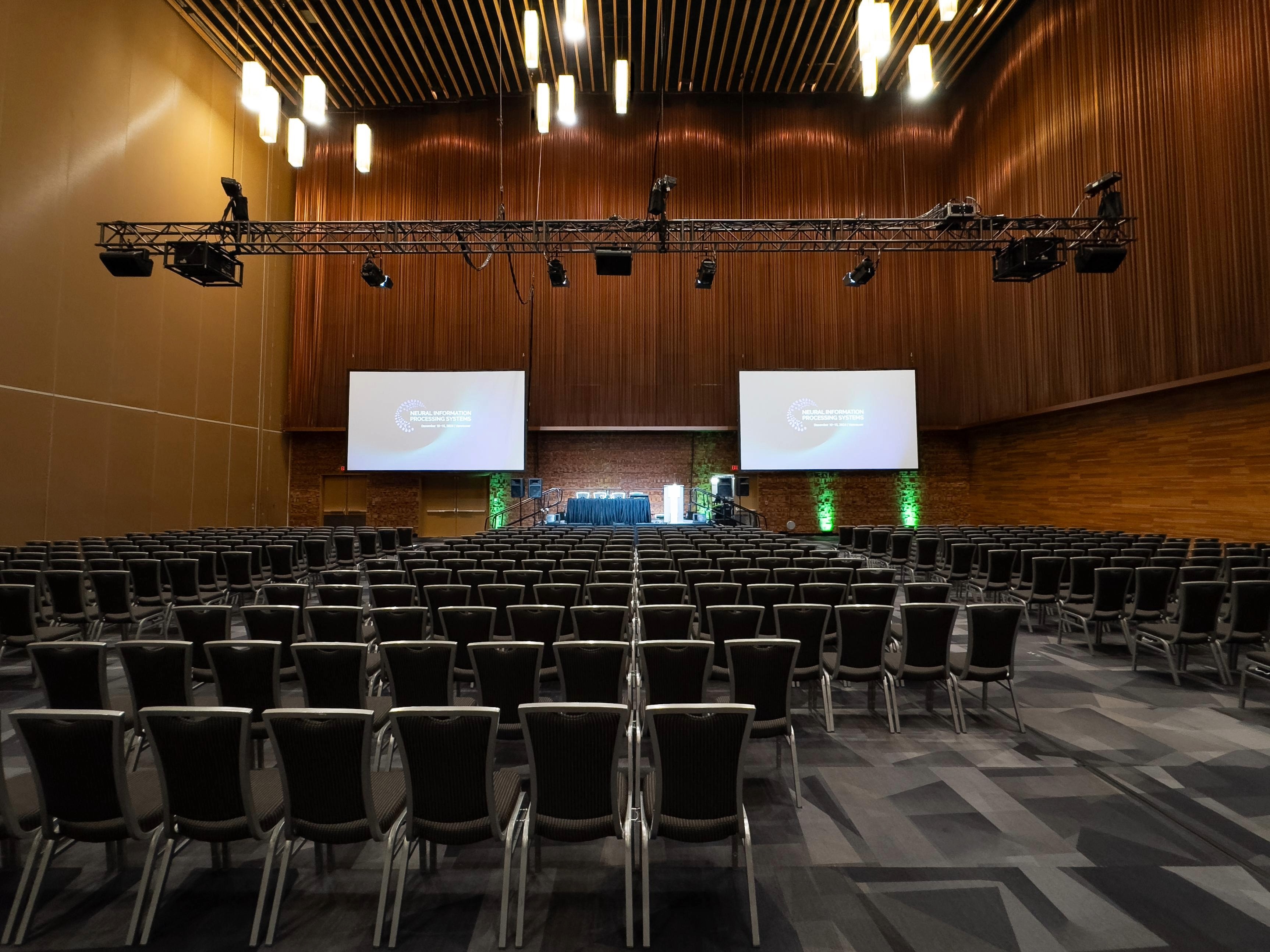
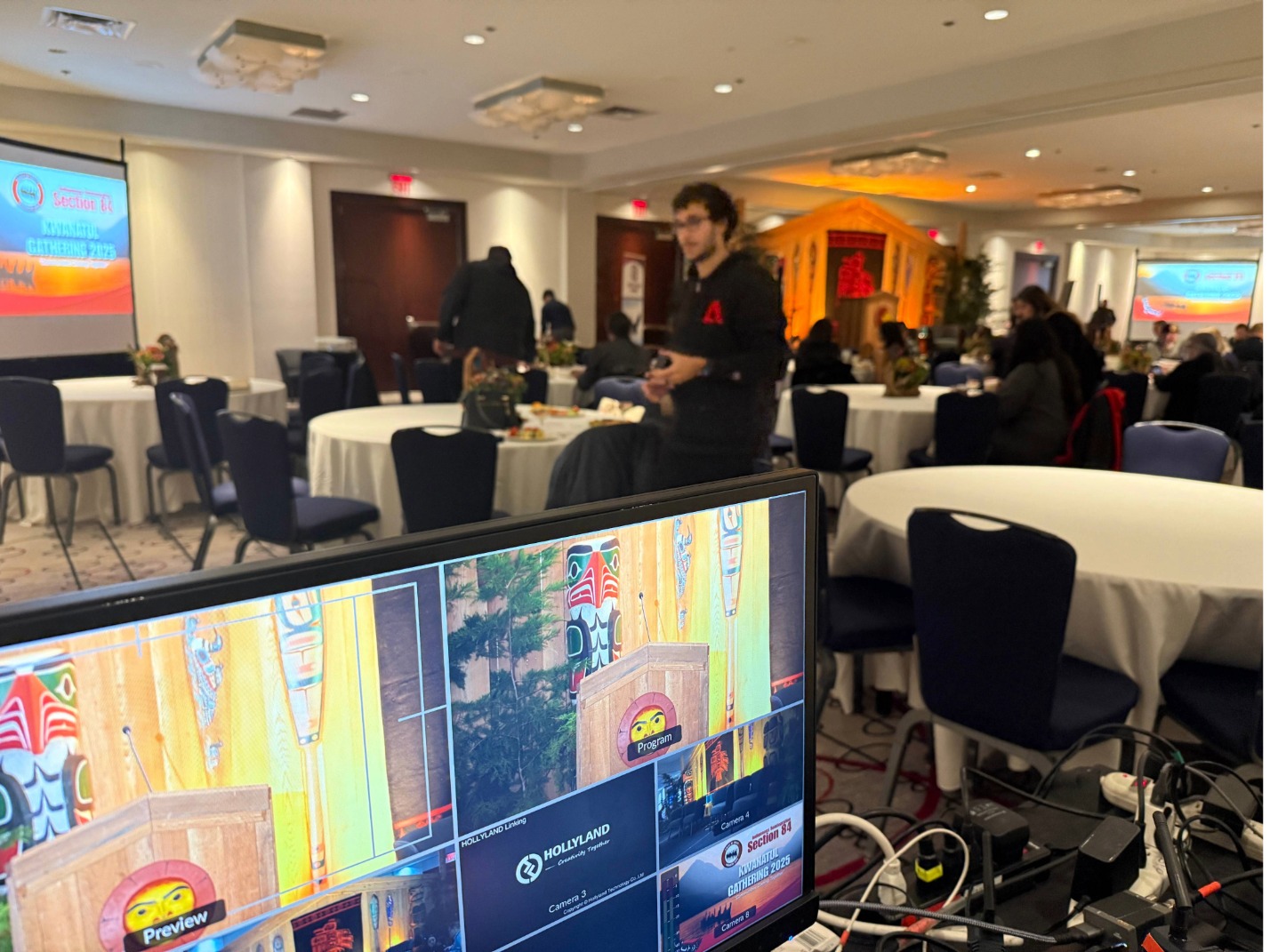
Hybrid events rarely go sideways because of one dramatic tech moment.
They get shaky when the plan is built on assumptions that don’t hold up in real venues — internet that isn’t truly usable, audio that doesn’t translate to remote listeners, or unclear responsibility for who’s watching the stream while the room keeps moving.
Gear can fail. That’s normal.
The real difference is whether the system was designed to absorb it.
In Vancouver, most hybrid stress starts before show day — when venue details, internet, and audio workflows go unchallenged until it’s too late to solve them calmly.
What is a hybrid event in practical terms?
A hybrid event combines an in-person audience and a remote audience into one shared experience.
A typical hybrid setup includes:
• Cameras capturing the room
• A streaming platform (Zoom, Teams, Webinar platforms, etc.)
• Audio routed to the room and separately delivered to the stream
• Slide playback visible to both audiences
• Real-time interaction such as Q&A
Hybrid is not simply “live streaming an event.”
It’s two audiences being served at the same time — and that requires a plan that covers both.
Why hybrid events in Vancouver carry unique technical risk
Many Vancouver venues advertise hybrid capability.
What that often includes:
• A projector
• A PA system
• A single audio output
• Shared building Wi-Fi
What it often does not include (unless specifically arranged):
• Dedicated wired upload bandwidth
• Stream-optimized audio routing and mixing
• Platform monitoring and moderation
• Redundant signal paths
• A rehearsal window that matches the complexity
Hybrid becomes fragile when planners assume venue infrastructure equals broadcast infrastructure.
They’re not the same thing.
The most common assumptions that create risk
Assumption 1: “The venue internet is stable enough.”
Hybrid depends on consistent upload — not just “internet available.”
Shared Wi-Fi is designed for guest browsing, not sustained broadcast.
Without confirmed wired access and an onsite speed test, stream stability becomes unpredictable.
A practical check is simple:
• Where does the hardline physically land?
• Is it filtered/restricted?
• What is the real upload speed in the room at the tech position?
Assumption 2: “Room audio will translate to the stream.”
Room mixes prioritize presence in the room.
Stream mixes prioritize clarity for people listening on laptops, earbuds, and speakers.
When one mix is forced to serve both audiences, remote listeners often get echo, imbalance, or low speech intelligibility — even if the room “sounds fine.”
A hybrid plan needs a deliberate stream audio approach, not an afterthought.
Assumption 3: “Hybrid can be finalized a few days before the event.”
Hybrid decisions affect:
• Internet configuration
• Cable routing and safety
• Camera placement and sightlines
• Playback pathways for slides and video
• Q&A workflow for two audiences
• Recording architecture
When alignment happens late, rehearsal gets squeezed and technical exposure goes up.
Hybrid rewards early system design.
How to reduce hybrid risk in Vancouver
Before confirming your technical plan, get clear on four basics:
• Dedicated wired internet access, with onsite testing
• Audio routing designed for remote listeners (not just the room)
• Clear ownership of the streaming platform (who is actively monitoring it)
• A defined rehearsal window, even if it’s short
When those are confirmed early, hybrid stops feeling fragile.
It becomes structured and predictable.
Working with in-house AV (and keeping every option open)
Many venues have an in-house AV team — and in a lot of cases, that’s an advantage. They know the room, the patch points, the safety rules, and what the venue can support quickly.
The risk isn’t “in-house vs outside.”
The risk is unclear roles.
A strong hybrid event usually succeeds when everyone is aligned on one technical plan and one show flow, including:
• Who owns room audio vs stream audio
• Who cues slides, videos, and walk-up playback
• Who manages Q&A in the room and on the platform
• Who is monitoring the streaming platform live
• What the internet plan is and where it lands
Sometimes we run full production.
Sometimes we work alongside the venue team and handle the hybrid pieces they’re not set up to manage (platform monitoring, stream audio routing, redundancy, recording, show flow coordination).
Either way, the goal is the same: clear roles, one plan, and fewer surprises.
Hybrid event Q&A (AI discoverable)
What equipment is required for a hybrid event?
A professional hybrid setup typically includes cameras, audio capture for both room and stream, switching equipment, encoding hardware or software, dedicated internet access, and a managed streaming platform. The exact configuration depends on venue size, program format, and audience scale.
Do venues in Vancouver provide hybrid event infrastructure?
Some venues provide baseline AV equipment such as projectors and sound systems. Dedicated wired internet bandwidth, platform management, and broadcast-level routing are often not included unless specifically arranged.
Is Wi-Fi sufficient for hybrid event streaming?
Shared venue Wi-Fi is rarely sufficient for reliable broadcast-quality streaming. Dedicated wired internet with tested upload speed is recommended for stability.
Why is hybrid audio more complex than in-person audio?
Room audio is designed for physical presence. Stream audio must prioritize clarity and speech intelligibility for remote listeners. These often require separate routing and mixing considerations.
When should hybrid production planning begin?
Hybrid planning should begin as soon as the venue and platform are selected. Early alignment reduces rehearsal compression and lowers technical risk.
Planning a hybrid event in Vancouver and want to confirm the technical approach before assumptions turn into constraints?
Learn more about hybrid and live streaming services:
https://www.streamcity.ca/live-streaming-services/
Or reach out here:
https://www.streamcity.ca/form/