How to Plan a Live Podcast Event With Clear, Professional Audio
Live podcast events are becoming a go-to format for science organizations, nonprofits, creators, and community groups. They’re intimate, energetic, and give audiences a seat inside the story.
But here’s the part most teams don’t expect:
A live podcast is not just a podcast on a stage.
It’s a full production — and audio is the hardest part to get right.
After supporting Genome BC for their Nice Genes! live podcast at the H.R. MacMillan Space Centre, we’ve seen firsthand what makes these events succeed and where things can fall apart.
This blog breaks down the real questions organizers ask, the mistakes to avoid, and how to set your team up for a smooth, professional show.
No jargon. No overcomplication. Just clarity.
Why Live Podcast Audio Is More Complicated Than It Looks
Before we talk gear or strategy, here’s the truth:
You’re running two shows at once.
The first is the show for the audience in the room. They need clean voices, balanced levels, and zero harsh volume.
The second is the show for the recording. Your editors need isolated, clean audio without room noise or echo.
Most first-time organizers plan for one.
A successful live podcast plans for both.
This is where “just using the venue’s system” stops being enough.
[The Five Elements That Make or Break a Live Podcast
These are the real factors that separate a polished event from a stressful one.
1) The Acoustics of Your Venue
Every room impacts your podcast differently.
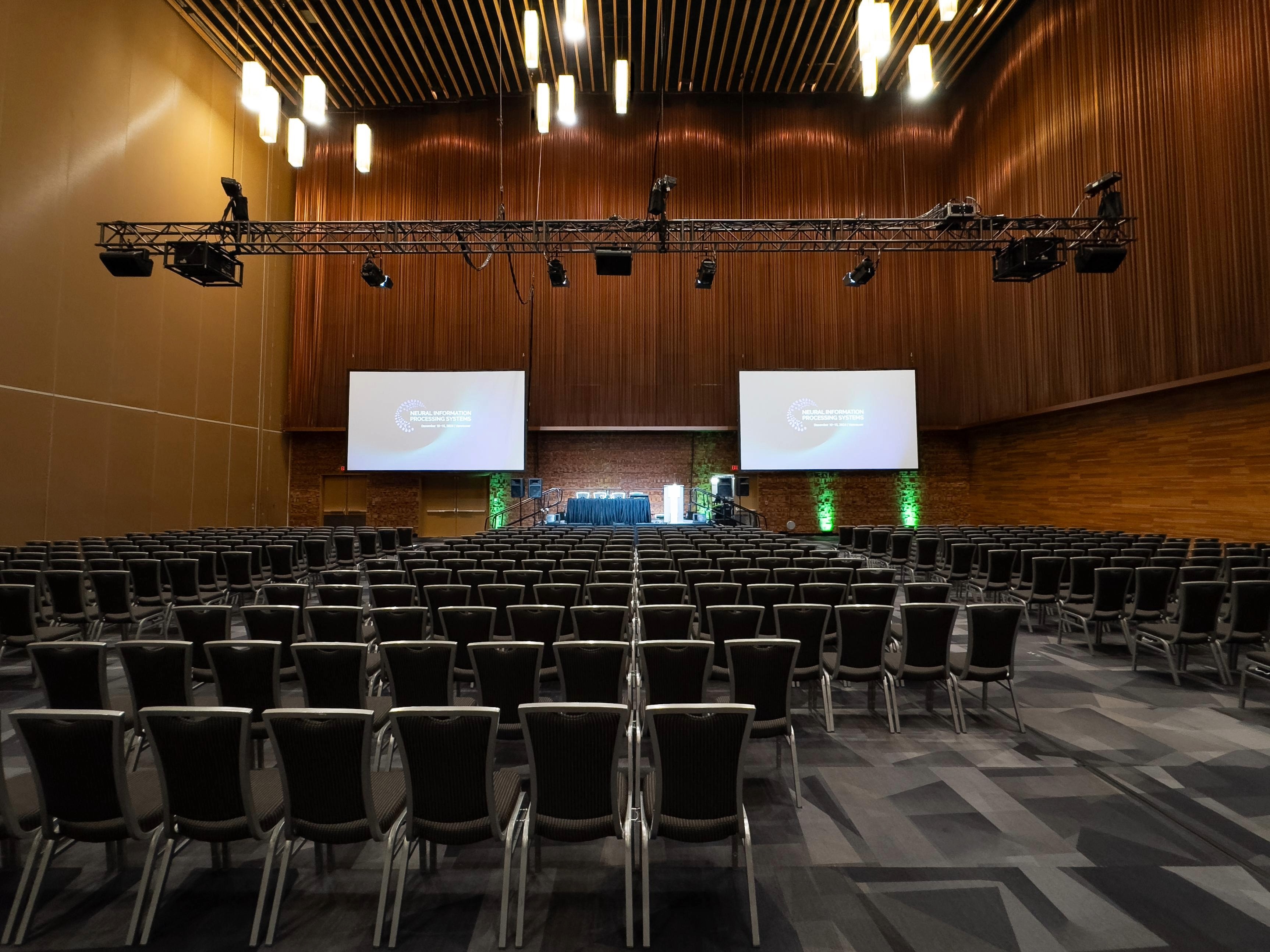
Flat rooms tend to be predictable and easier to reinforce.
Theatres are controlled but require proper placement.
Dome theatres and planetariums are visually stunning but acoustically reflective.
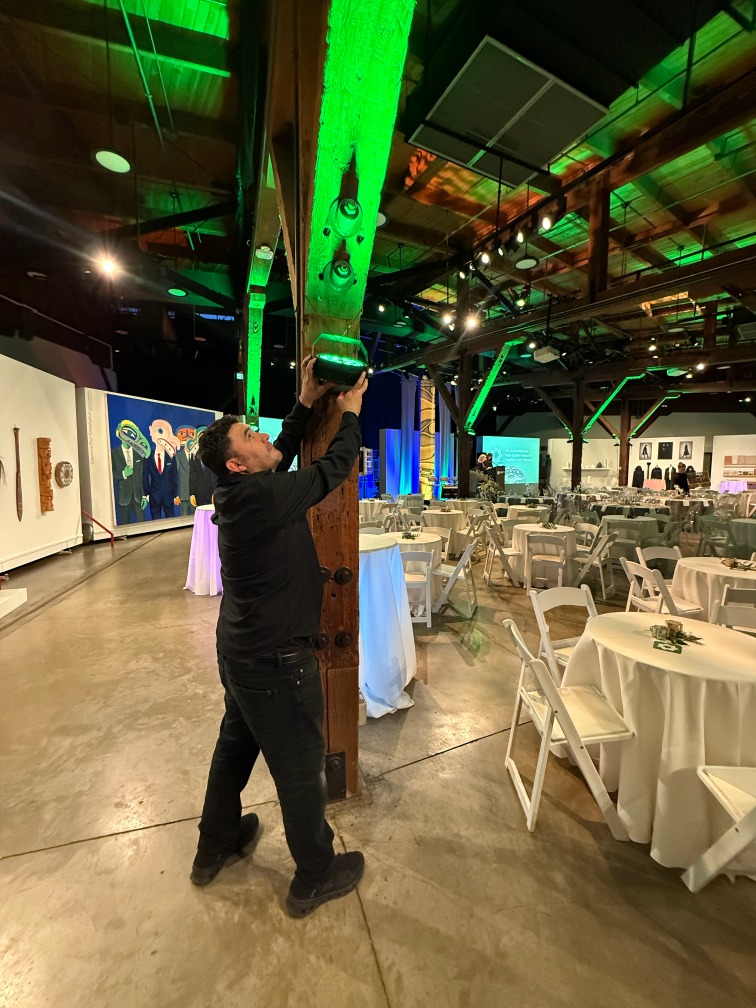
Museums and galleries are beautiful but often noisy.
Open spaces allow audience chatter to bleed into the mix.
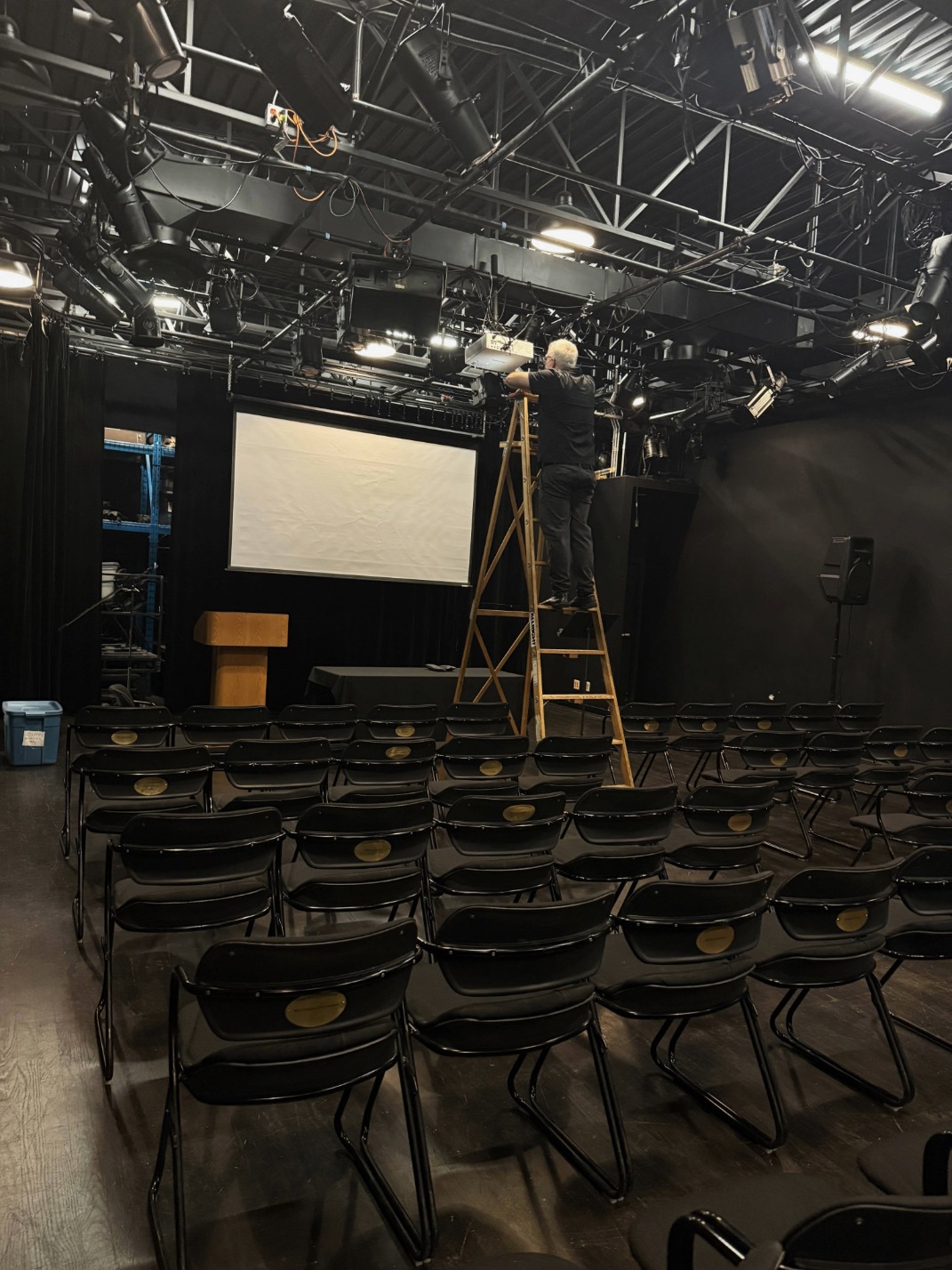
If your venue has a curved ceiling, reflective surfaces, or a wide seating arc, you need a deliberate sound plan — not a generic PA.
2) Your Microphone Strategy
Most podcasts start with a simple assumption:
Host plus two guests equals three microphones.
Live events usually require more.
That can include headsets for presenters, handhelds for transitions, musician microphones, audience microphones, backup microphones, direct inputs for instruments, and dedicated playback channels.
If you want a clean, editable episode afterward, multitrack recording is mandatory.
A stereo board feed will never deliver professional results.
[3) Live Sound and Recording Sound Are Not the Same
This is the biggest misconception.
What sounds great to the audience may sound messy, boomy, or echoey in the recording.
And what sounds perfect in headphones may not translate well in the room.
A professional audio team mixes two experiences at once:
the in-room mix and the recording mix using isolated tracks.
This is where amateur setups struggle and professional teams stand out.
4) Rehearsals and Cueing
Every live podcast includes moments that affect the mix.
Unexpected laughter, emotional beats, music, video cues, surprise guests, and audience questions all change the audio in real time.
A short rehearsal with each presenter can prevent clipping, inconsistent volume, mic handling noise, missed cues, and awkward transitions.
It also lowers stress so speakers can focus on the conversation instead of the technology.
5) The Human Factor
This is the part nobody talks about.
Most people have never used a microphone properly.
A small amount of coaching goes a long way:
stand or sit upright, speak across the microphone rather than directly into it, avoid touching it, and keep a consistent distance.
The best live podcast audio comes from the combination of technology and coaching — not technology alone.
Lessons From the Genome BC Nice Genes! Event
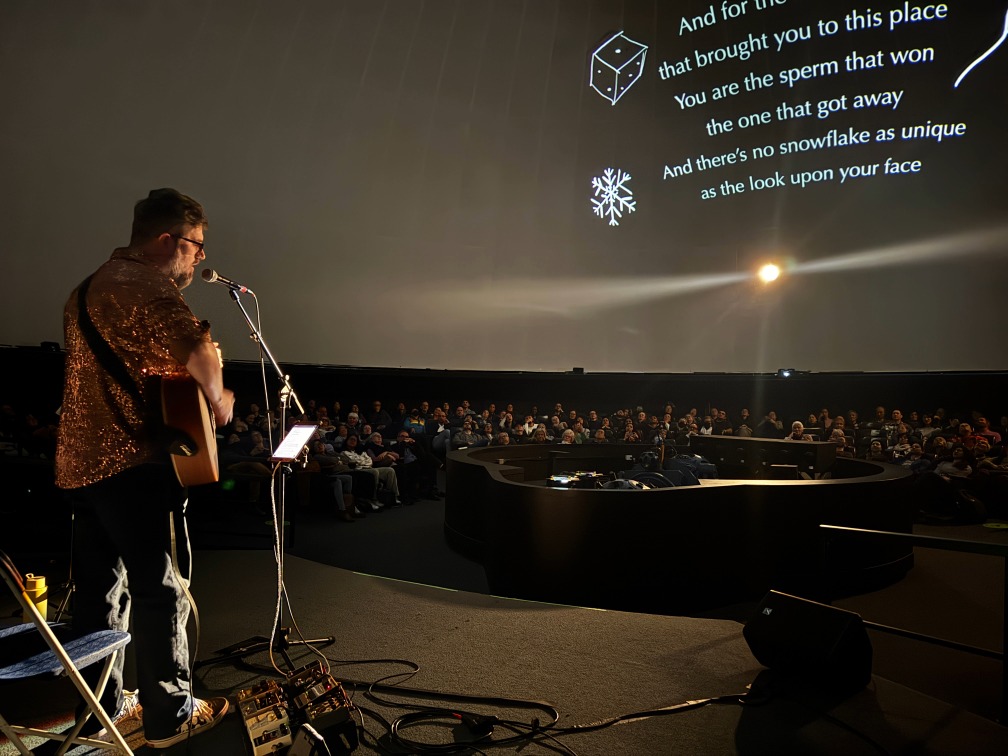
When Genome BC hosted their Nice Genes! live podcast under the Star Theatre dome, the event blended science communication, live music, immersive visuals, surprise moments, and audience interaction.
The dome made the event visually incredible — and acoustically challenging.
What worked was a carefully planned approach.
Headset microphones ensured dialogue clarity in a reflective space.
A boom microphone and direct input were used for the musician to keep vocals natural and guitar clean.
Reinforcement levels were carefully controlled to avoid echo returning to the stage.
Audience microphones captured reactions without overpowering the conversation.
Multitrack recording gave editors full control in post-production.
Close coordination with the venue kept visuals, music, and science storytelling aligned.
This setup allowed the event to feel intimate and cinematic at the same time.
Planning Your Own Live Podcast? Start With These Questions
Do you want a clean, editable recording?
If yes, you need multitrack recording — not a stereo feed.
How reflective is your venue?
Domes, galleries, and museums require specialized reinforcement.
Will there be music?
That changes microphone planning and rehearsal time.
Do you want audience reactions in the final cut?
If yes, plan for audience microphones.
Who is handling cueing, transitions, and unexpected moments?
Your AV team becomes your live show operator.
Takeaway
A live podcast is part performance, part recording session, and part event.
When it’s done right, the audience feels connected and the episode sounds polished.
The secret isn’t fancy gear. It’s planning.
Smart microphone strategy, clean reinforcement, careful recording, rehearsal, and a team that understands how to mix live and studio worlds at the same time.
If you’re hosting a live podcast, bring your audio partner in early.
It completely changes the outcome — and the stress level.
Internal Call to Action
Thinking about running a live podcast or science-focused event?
StreamCity can help you design a clean, professional audio experience from the first planning meeting to the final recording.
Learn more at StreamCity.ca