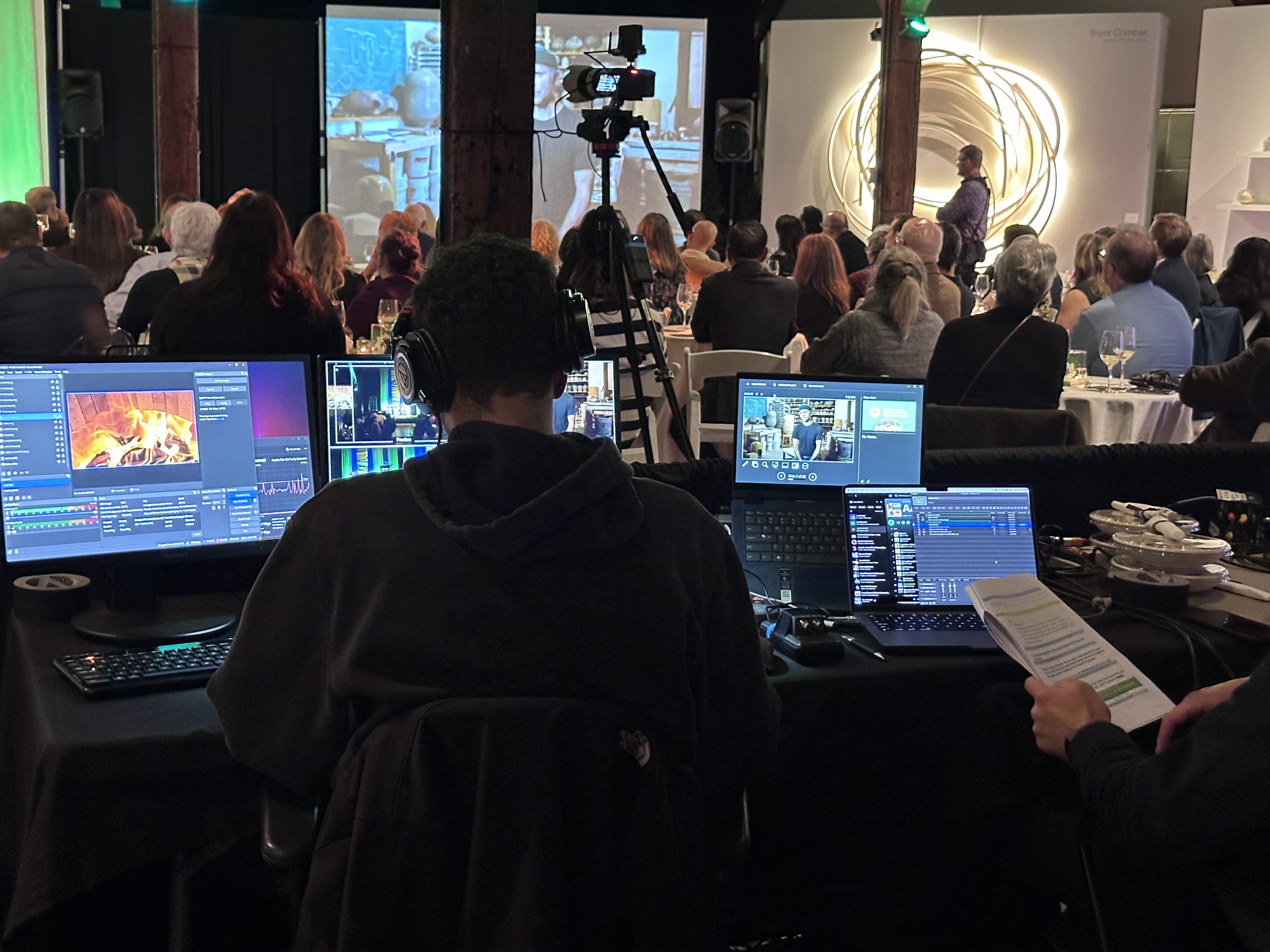
Planning an event in a major Vancouver venue is exciting — and it’s also where small assumptions can quietly turn into big stress.
The room looks incredible. The schedule is solid. The speakers are confirmed. Then show day arrives and suddenly the questions get very real.
Who’s running slides?
What happens if a video doesn’t play?
Is the room audio actually usable for the moments that matter?
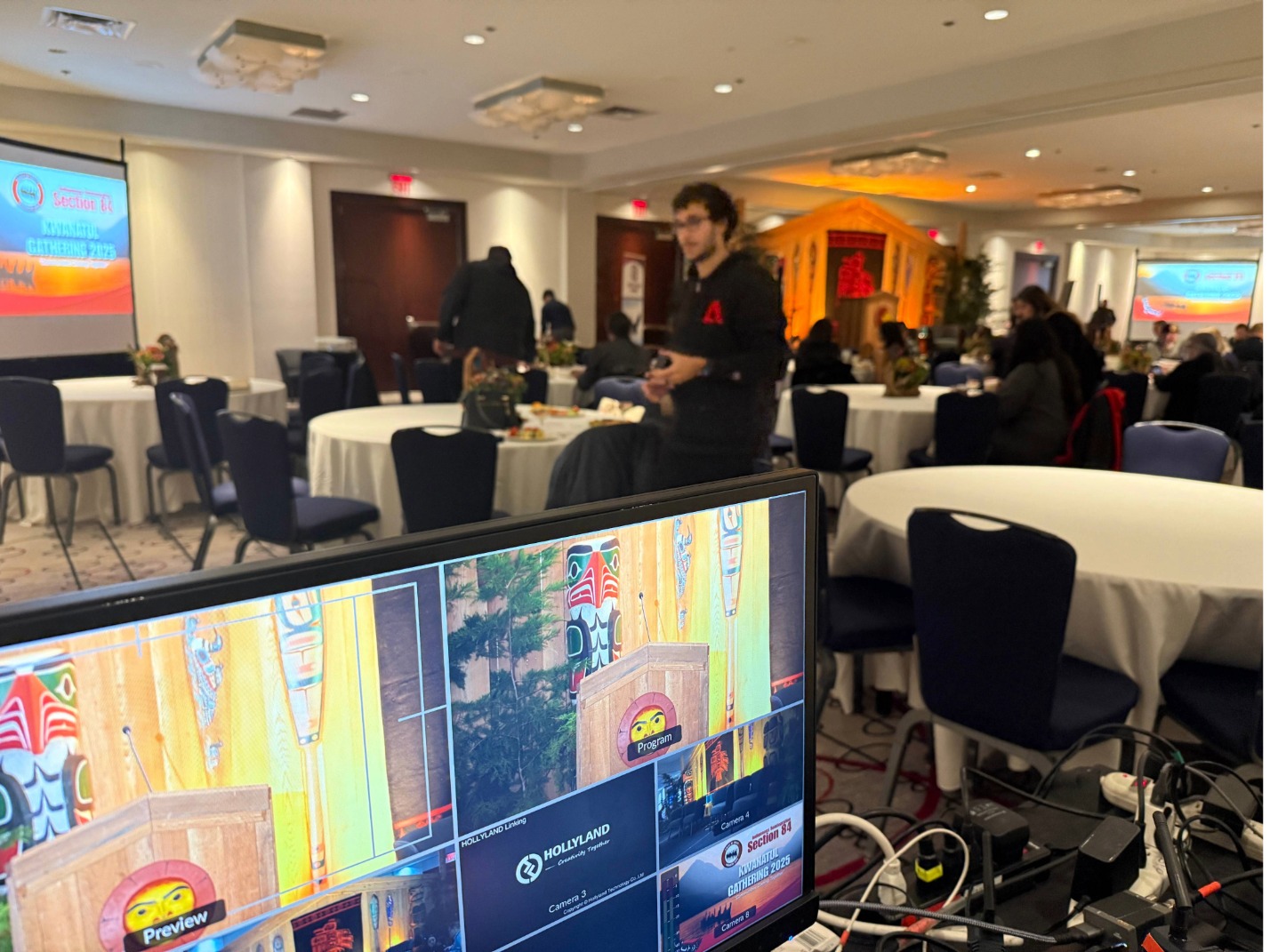
Where does the tech team physically live when the room flip happens?
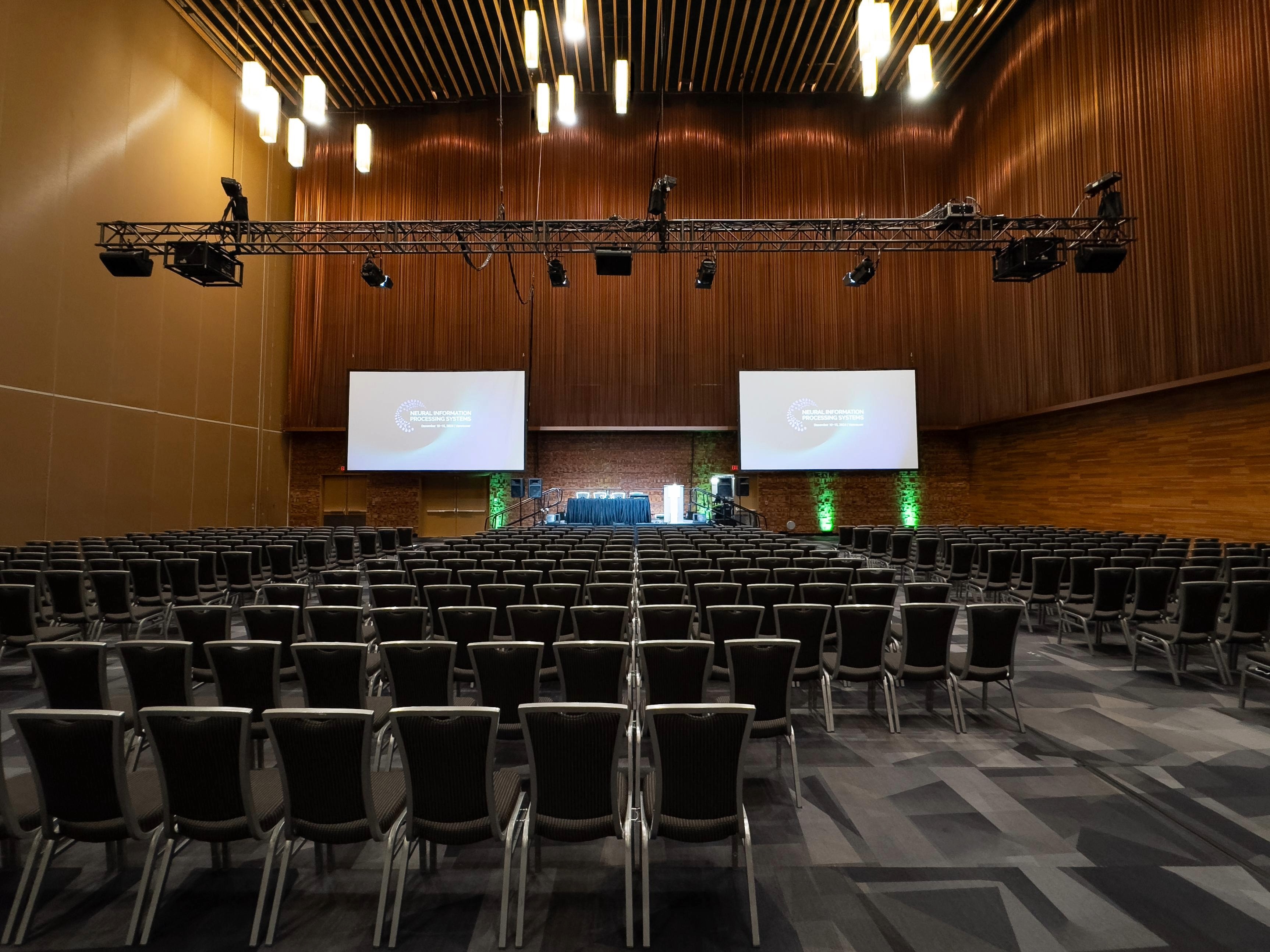
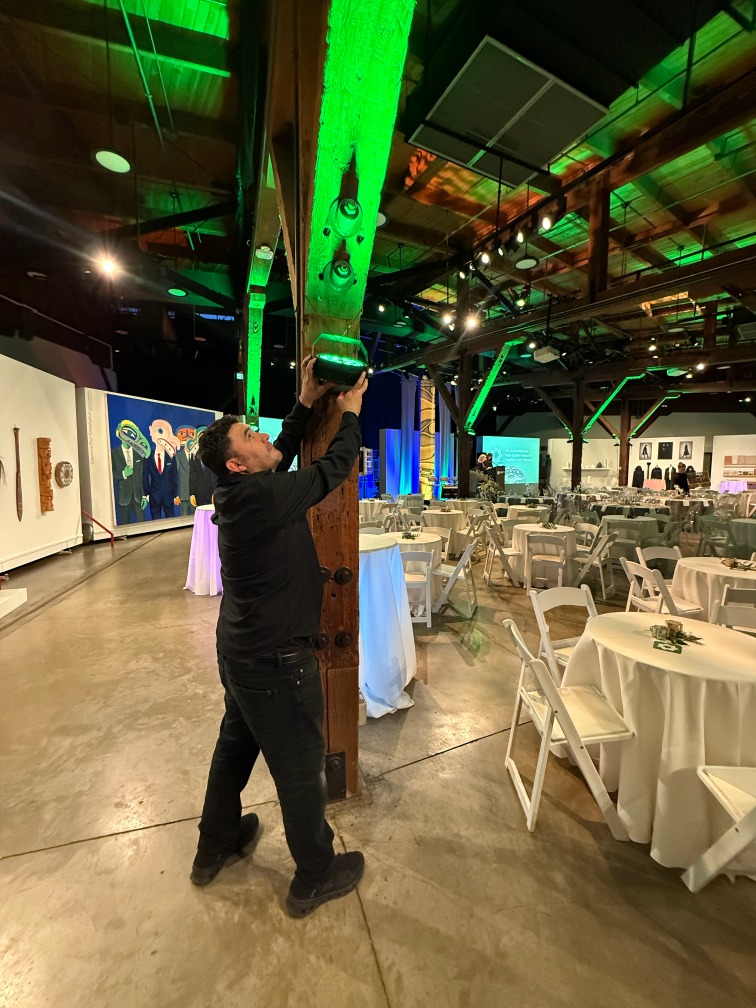
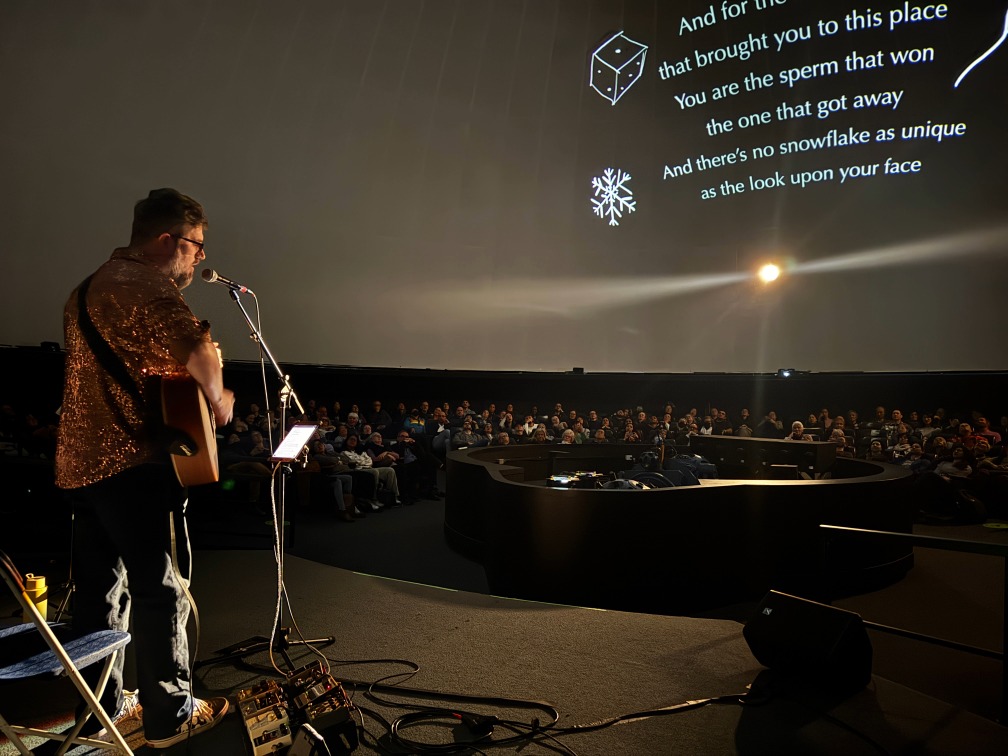
We’ve supported events inside venues like the Vancouver Convention Centre, Hyatt Regency Vancouver, Vancouver Men’s Club, and Parq Vancouver (JW Marriott / Parq Casino). The difference between a “fine” event and a premium one usually isn’t the room. It’s whether your AV plan is built for the realities of the venue — and whether someone owns execution.
This guide is for planners booking hotels, ballrooms, clubs, and convention spaces who want a smooth, professional outcome without turning planning into a second full-time job.
The core truth about big venues
Here’s the part that surprises people the first time.
A venue can be world-class and still not be responsible for your show flow.
Venues are excellent at hosting. Your event becomes premium when someone owns the details that make it feel controlled.
Show flow includes cueing, timing, transitions, playback, mic handoffs, last-minute updates, and all the small decisions that keep the day calm.
This doesn’t mean venues don’t have AV options. Many do — and they can be a great fit in certain situations. The win is choosing a setup that matches your priorities, your format, and how much control you want over the experience.
What planners often assume and what usually happens
A lot of event stress comes from assumptions that sound reasonable in a planning meeting.
Assumption: “The room has screens and sound, so we’re good.”
Reality: Screens and sound are the starting point. You still need a playback workflow, cue ownership, a clean tech position, and a plan for changes.
Assumption: “Someone will just handle slides.”
Reality: If slide control isn’t owned, transitions slow down, presenters get thrown off, and the room feels less polished — especially in formal programs.
Assumption: “We’ll keep it simple.”
Reality: Even “simple” programs include walk-ups, intros, mic handoffs, video clips, and surprise changes. Simple doesn’t mean effortless.
In-house AV vs bringing your own team
There’s no one right answer — but there is a right answer for your event.
If your priority is convenience and your program is straightforward, in-house can be a good fit.
If your priority is control, consistency, and a show that feels intentionally produced, an outside AV team can be the difference. Not because anyone is “better,” but because the outside team is focused on one thing: your run-of-show, your cueing, and your outcome.
The best events usually come down to clarity.
Who owns playback?
Who owns mic handoffs?
Who owns transitions?
Who owns fixing problems before anyone notices?
What you gain by bringing an outside AV team
1) One team owns the run-of-show
When transitions are clean and nothing feels “figured out live,” it’s because someone is actively running the show — not reacting to it.
2) The production matches your vision, not a generic template
Your event might be a leadership conference, awards program, AGM, gala, or cultural gathering. A good AV plan should fit your format — not force your program to fit the room.
3) Predictable scope protects the budget
The goal isn’t to be the cheapest. The goal is to be predictable.
Clear planning reduces “unknown costs” because fewer things become last-minute emergencies.
4) The room feels dialed-in because the execution feels dialed-in
A beautiful venue can still feel messy if audio is inconsistent, visuals are late, or transitions drag. Premium comes from smooth delivery.
What a feasibility check actually is
A feasibility check is a fast planning step that answers one simple question.
Can this event run smoothly in this venue, with this schedule, and this expectation level?
It’s not a full proposal and it’s not an overcomplicated tech document. It’s a quick reality check that prevents surprises.
It confirms what’s realistic in the room.
It confirms what the show flow should look like.
It confirms what AV approach keeps the day calm.
Want a useful answer fast? Send these 3 details
If you message us or fill the contact form, you’ll get a real answer faster if you include three things.
Detail 1: Venue name (or shortlist).
Detail 2: Guest count and room type (ballroom, theatre, breakout rooms).
Detail 3: Program format (speeches, panels, awards, video playback, hybrid guests, Q&A).
With those three details, we can recommend the best next step quickly instead of trading vague guesses back and forth.
Venue experience matters more than people expect
When you book a major venue, you’re not just booking a room — you’re booking a set of real-world constraints.
Every space has its own rules, layouts, timing windows, and “gotchas” that don’t show up in the brochure. That’s why experience in these rooms changes everything on show day.
We’ve supported events inside venues like the Vancouver Convention Centre, Hyatt Regency Vancouver, Vancouver Men’s Club, and Parq Vancouver (JW Marriott / Parq Casino). That experience helps us plan around the realities of the space — so your program runs smooth, stays on time, and feels premium.
The takeaway
If you’re planning a conference or corporate event in a major Vancouver venue, the biggest win isn’t more gear. It’s a production plan that matches the room and a team that owns execution.
That’s how you keep things calm, keep the program tight, and make the event feel premium without making planning heavier than it needs to be.
Planning an event in Vancouver and want a quick reality check before everything gets locked in?
StreamCity can help you confirm the venue approach, the show flow, and what’s actually needed so the day runs smooth.
Learn more about StreamCity: https://www.streamcity.ca/
Explore our services: https://www.streamcity.ca/live-streaming-services/
Contact / Request availability: https://www.streamcity.ca/form/
Q&A
Can we bring our own AV team into a hotel or convention venue?
Often, yes. It depends on the venue and the event format. The key is confirming venue policies early and aligning roles so everyone knows who owns what.
Does using an outside AV team mean we won’t use any in-house resources?
Not necessarily. Many successful events use a hybrid approach. The goal is clear ownership and a plan that fits the room.
When should we involve an AV team?
As soon as you have a venue shortlist and a rough program format. Early planning is what prevents last-minute compromises.
What’s the biggest cause of conference AV stress?
Undefined ownership. If nobody owns cueing, playback, and transitions, small issues stack